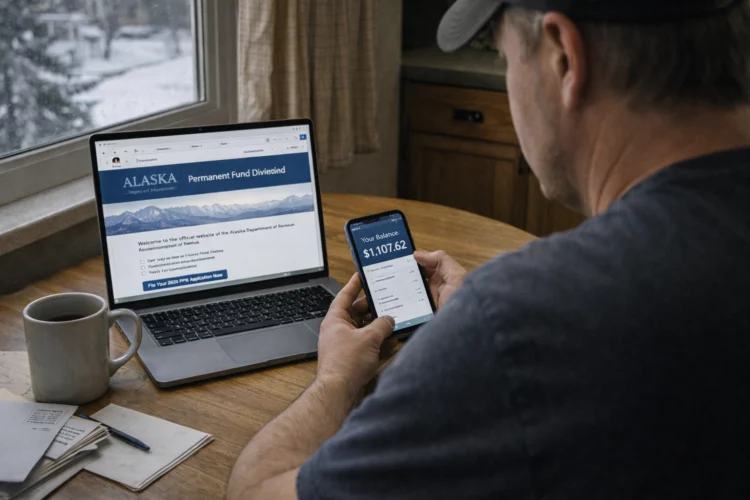
Thousands of Alaskans are about to see a familiar but welcome deposit land in their bank accounts. The second and final rounds of this year’s Permanent Fund Dividend payments are being issued, delivering $1,000 to eligible residents as part of Alaska’s long-standing revenue-sharing program.
While some headlines are calling it a “stimulus check,” the payment is not a temporary federal relief program. It is part of Alaska’s annual dividend system, funded by the state’s oil and mineral revenues. For many residents, it is a dependable boost that helps cover essentials, seasonal bills, or savings goals.
Here is what to know about the current payments, eligibility requirements, and how this year’s amount compares to previous payouts.
What Is the Alaska Permanent Fund Dividend
The Alaska Permanent Fund Dividend, commonly known as the PFD, distributes a portion of the state’s oil and mineral revenue to qualifying residents each year.
The program is administered by the Alaska Permanent Fund Dividend Division and is funded through investment earnings from the state’s Permanent Fund, which was established to manage surplus oil revenues for long-term benefit.
Unlike federal stimulus payments, the PFD is an ongoing program that has operated for decades. It is not based on income, but on residency and eligibility criteria.
How Much Is the 2026 Payment
For the current payout cycle, eligible Alaskans will receive $1,000.
This represents a decrease from last year’s $1,702 payment. The lower amount reflects reduced mineral revenue and investment performance compared to prior years.
How This Year Compares to Recent PFD Payments
Recent PFD payment amounts show how much the dividend can fluctuate:
2024: $1,702
2023: $1,312
2022: $3,284
2021: $1,114
2020: $992
2019: $1,606
The unusually high 2022 payout was tied to strong energy prices and additional legislative decisions. The current $1,000 figure is closer to the long-term average seen over the past decade.
When the 2026 PFD Payments Are Being Sent
Payments are being issued in multiple rounds based on application status.
February Payment Round
Residents whose application status showed “Eligible-Not Paid” as of February 11 will receive their $1,000 payment on February 19.
March Final Round
The final distribution of this cycle will occur on March 19 for applicants whose status is “Eligible-Not Paid” on March 11.
Earlier in the year, the first round of payments was sent on January 15 to eligible residents whose status was confirmed as of January 7.
Deposits are typically made directly into bank accounts for applicants who selected direct deposit. Others may receive paper checks depending on their filing method.
Who Qualifies for the $1,000 Payment
Eligibility for the PFD is based on residency and legal standing rather than income level.
Permanent Residency Requirement
Applicants must intend to remain residents of Alaska indefinitely. They cannot have claimed residency in another state or country during the past two years.
This requirement ensures that the dividend is reserved for long-term residents rather than temporary workers or recent movers.
Criminal and Incarceration Rules
Applicants cannot have been incarcerated during the qualifying year for certain offenses. Specific criminal convictions may disqualify individuals from receiving the dividend.
Application Process
Residents can check their application status through the online myPFD portal. Paper applications are also available at designated distribution centers across the state.
If an application shows “Eligible-Not Paid,” the individual is scheduled to receive payment in the next distribution cycle.
Why the PFD Amount Changes Each Year
The Permanent Fund Dividend is not fixed. It depends heavily on the state’s oil revenues, investment earnings, and legislative decisions.
Oil and Mineral Revenue Influence
Alaska’s economy remains closely tied to oil production and natural resource extraction. When prices are strong and investment returns are high, the dividend tends to increase. When revenues decline, payouts shrink accordingly.
Legislative Decisions Also Matter
State lawmakers play a role in determining how much of the Permanent Fund’s earnings are distributed to residents versus allocated to other state budget needs.
This combination of market performance and policy decisions explains the wide variation in annual payments.
When Will the Next Application Window Open
The next application period for the 2027 dividend will reopen later this year. Payments tied to that cycle are expected to be distributed in 2027.
The exact payout amount for next year is not yet known. It will depend on oil prices, investment returns, and state budget decisions in the coming months.
Why Many Call It a “Permanent Stimulus”
Although the PFD is not a federal stimulus program, many residents view it as a yearly financial boost that helps offset the high cost of living in Alaska.
For some households, the $1,000 payment may go toward heating costs, groceries, or debt reduction. Others use it for savings or large annual expenses.
Unlike one-time federal relief checks, the dividend is an expected annual payment, though the amount varies year to year.
What Alaskans Should Do Now
If you are expecting a payment, check your status through the official online portal to confirm whether you are listed as “Eligible-Not Paid.” That status determines your payment date.
Ensure your direct deposit information is accurate to avoid delays. If you filed by paper, monitor your mail for updates.
The Bottom Line on the $1,000 Alaska PFD Payment
The $1,000 Permanent Fund Dividend payments now arriving in bank accounts are part of Alaska’s long-standing revenue-sharing system, not a new federal stimulus program.
While the amount is lower than last year, it remains a meaningful annual benefit for eligible residents. With final payments scheduled for March 19, most qualified Alaskans should see their deposit within weeks.
Next year’s amount remains uncertain, but for now, the focus is on ensuring applications are properly processed and payments reach eligible residents on time.